
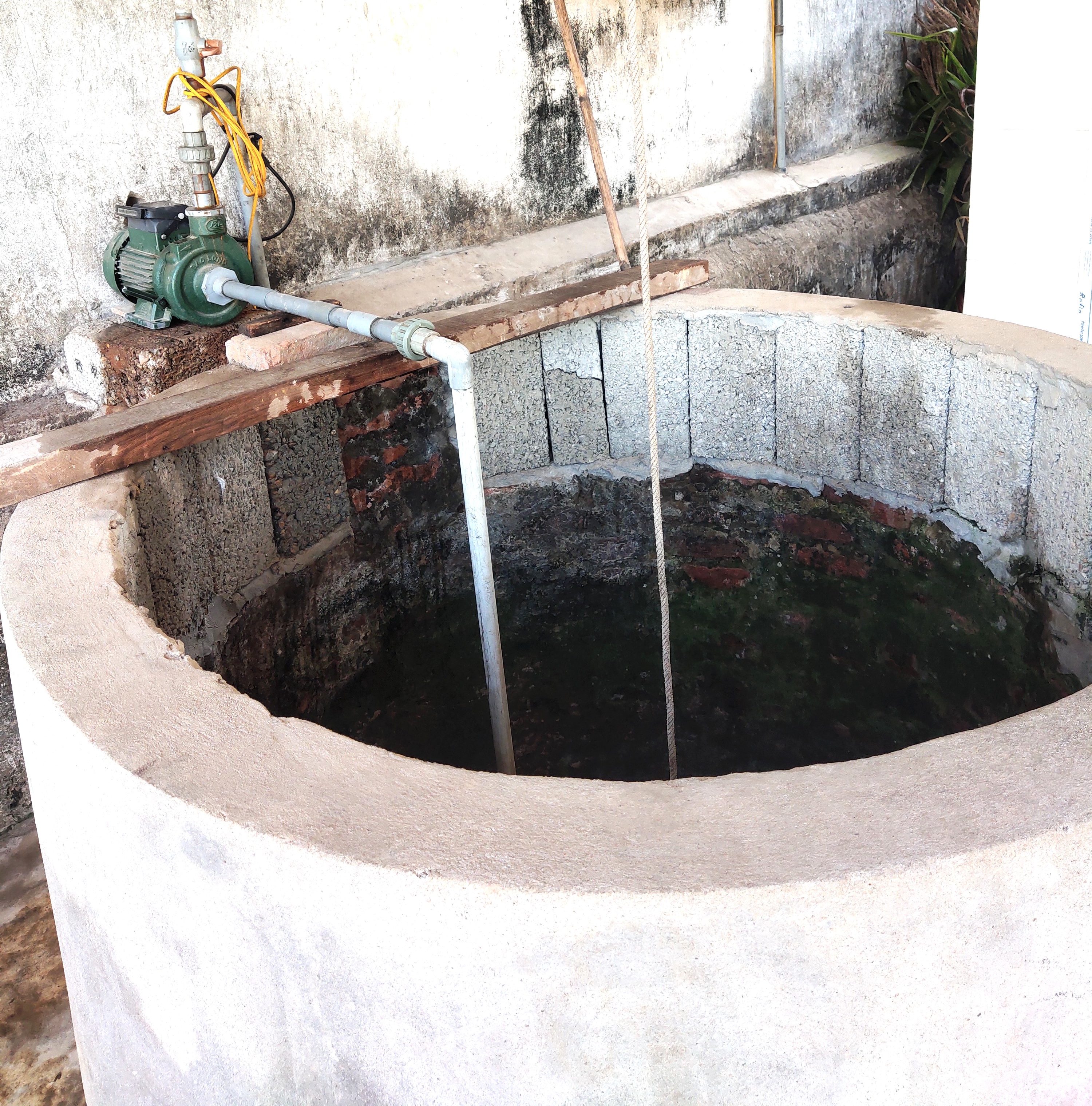
A project in international development brings piped water to a rural village.
Before the project, families walked long distances to collect water. Afterwards, clean water flows close to their homes.
We could count the households connected. We could calculate the time saved, estimate the economic return, measure reductions in illness, or ask people whether their lives have improved. All are legitimate measures of change.
But none quite answers the moral question beneath social impact evaluation: When can we say that development has genuinely made someone’s life better?
This question lies at the heart of Amartya Sen’s Capability Approach. Sen asks us to look beyond what people possess, and even beyond whether they report being satisfied, towards something more demanding: what are people genuinely free to do and to be?
Development, from this perspective, is ultimately about expanding substantive human freedom. But translating that idea into social impact evaluation is less straightforward. How do we know when someone’s freedom has actually expanded?
In Social Impact Assessment with the Capability Approach, I explore capability change through three determinants: effective access to resources, effective agency, and socio-cultural conditions. Each takes us a little further from what development provides towards the more difficult question of what it actually makes possible in people’s lives.
1. Effective access to resources: Who should get what — and why?
The first determinant appears, initially, to be the simplest. People need resources. A family without sufficient income needs money. A village without safe water needs infrastructure. A child without schooling needs access to education.
But the moment resources are scarce, a more difficult question appears: Who should receive them, how much should they receive, and on what moral basis?
This is an old problem in moral philosophy and economics. One answer is to maximise overall welfare: if an intervention produces the greatest total benefit, it can be judged desirable. Sen’s objection to this utilitarian reasoning is that the sum can conceal the people within it. A large improvement for many can coexist with severe deprivation for a few. If we only add together gains, we can lose sight of who has the freedom to live well and who does not.
The Pareto principle offers another apparently modest test: a change is desirable if at least one person becomes better off and nobody becomes worse off. Yet this tells us remarkably little about justice. A society containing profound inequality can satisfy this test while leaving its most disadvantaged members exactly where they were.
Resource-based approaches raise a different problem, and one that is particularly important for development: equal resources do not necessarily produce equal freedoms.
Imagine two poor households in our village. The project offers each the same subsidy to connect to the new piped-water system. On paper, this appears fair: the same assistance has been made available to both.
But one household lives close to the new water main and can afford the remaining connection fee. The other lives further away, has a lower and irregular income, and faces a considerably higher connection cost. The same subsidy that creates an opportunity for the first household remains insufficient for the second.
The resource has been distributed equally. The freedom it creates has not.
This is where the Capability Approach changes the evaluative question. Instead of asking only how much each person received, we ask what each person needs in order to have a genuine opportunity to achieve something they value.
For poverty reduction, this distinction is fundamental. Poverty cannot be understood entirely as insufficient income because income is a means rather than an end. What matters is what income, infrastructure, public services and other resources actually enable someone to do.
Sometimes, then, justice requires giving people different resources precisely because their circumstances are different. Equality of resources and equality of freedom are not the same thing.
2. Effective agency: Is a better life enough?
Now return to the water project.
Suppose piped water dramatically reduces the time women spend collecting water. Women are less tired. They have more time for paid work, family, rest or other activities. Their health may improve, and they may quite reasonably say that their lives are better.
The project has improved their well-being.
But has it advanced gender equality?
Sen’s distinction between well-being and agency becomes crucial here. A person can experience an improvement in well-being without becoming more able to shape the circumstances of her own life. Equally, a person may exercise agency in pursuit of something she values even when doing so brings no immediate improvement in her own welfare.
This is why Sen resists reducing human motivation to utility or self-interest. People do not simply receive benefits and experience satisfaction. They form values, make commitments, care about other people, pursue collective goals and act for reasons that cannot always be translated into personal welfare. They are moral agents capable of shaping their own lives and contributing to the lives of others.
Imagine that the women in our village were never involved in deciding where the water points should be placed. Engineers selected the locations, village leaders approved them, and the women benefited enormously.
Their well-being improved.
Now imagine something slightly different. Women participate in deciding where the water points will go. One argues that a proposed location will still require older women to walk too far. Another raises concerns about the safety of girls collecting water in the evening. Another argues that a water point should be located near the poorest households rather than near the homes of village leaders.
Their arguments change the design.
The difference between these two scenarios is not primarily the amount of water delivered. It lies in agency: whether people can form their own goals, make choices, act upon their values and have those actions matter.
This gives us a more demanding way of thinking about gender equality. We often measure women’s inclusion through access: women attending training, joining committees, receiving technology or participating in livelihood activities. These things matter, but they tell us relatively little about whether women possess effective agency.
A woman can sit on a committee and have no influence. She can be consulted and ignored. She can receive income without controlling it. She can have access to technology while someone else decides when and how she uses it. She can benefit greatly from a development project while remaining largely excluded from the decisions shaping her life.
The question for gender equality is therefore not simply whether women gained access, but whether their capacity to make consequential choices expanded. Could they decide and act? Were their reasons taken seriously? Could their actions change outcomes for themselves and for others?
This distinction also warns us against equating subjective well-being with empowerment. People can become accustomed to constrained circumstances and adjust their expectations to what appears possible. If we ask only whether someone is happier or more satisfied, we may therefore miss an important dimension of injustice.
The Capability Approach asks the harder question: what is she actually free to choose?
3. Socio-cultural conditions: Whose freedom are we talking about?
Yet agency does not exist independently of the world in which a person acts.
This brings us to the third determinant: socio-cultural conditions. Our choices are made inside families, communities, institutions, economies and systems of meaning. These shape what we regard as possible, what others permit us to do, whose voice carries authority, and sometimes even what we learn to expect for ourselves.
Consider a woman with a physical disability living in our village. The new piped-water system reaches her household, but the tap is positioned where she cannot use it independently. Lowering the tap and improving the pathway might address that physical barrier.
But suppose decisions about household water are made by her husband. We might invite her to the village water committee. Yet the meeting is held in an inaccessible building. We can move the meeting. She attends, but when she speaks, others defer to her male relatives because they assume that a woman with disability should be cared for rather than make decisions herself.
At what point, then, have we achieved inclusion?
Disadvantage is not simply additive. A woman with disability does not experience gender inequality, disability and poverty as separate conditions; they are woven together in the circumstances of her everyday life, shaping both the opportunities available to her and her ability to act upon them.
Socio-cultural conditions include the social norms, relationships, institutions and distributions of power that determine how far resources can become genuine opportunities. For the woman in our village, exclusion cannot be located neatly in her impairment, her gender or her poverty. A poorly designed pathway may make the water point inaccessible; limited income may make adaptations unaffordable; gender norms may privilege men’s voices; and attitudes towards disability may position her as someone to be cared for rather than someone whose judgement matters. These barriers intersect, producing an experience of constraint that may be quite different from that of another woman or another person with disability.
Capability therefore depends not only on the resources a person has, but on the social world in which she must turn those resources into a life she has reason to value.
When the water begins to flow
At some point, the pipes are laid, the taps are connected and clean water begins to flow. From the perspective of a development project, this is often the moment when success becomes visible. There is something to count, something to photograph, something to report.
And these achievements matter. But from a Capability perspective, this may be the point at which the more interesting evaluation begins.
The social impact of the water system does not reside in the pipe itself, but in what becomes possible because it is there: whether a poor family can actually afford to connect to it; whether a woman gains not only time but greater freedom over how that time is lived; whether a woman with disability can use the water independently and have a voice in the decisions that govern it. The same resource can widen one person’s world while barely altering another’s.
Perhaps none of this is as unfamiliar as the language of development evaluation makes it sound.
In our own lives, we rarely judge how well we are living simply by counting what we possess. We think about whether we have meaningful choices, whether we can act on the things that matter to us, and whether the circumstances around us open possibilities or close them down. We understand, almost intuitively, that two people can be given the same opportunity and yet not be equally free to take it.
These are questions of resources, agency and social conditions, although we may never call them that.
Perhaps, then, the Capability Approach is not asking us to adopt an entirely new way of thinking about development. It is asking us to extend to other people’s lives the same complexity with which we already understand our own.
We know that possessing something is not the same as being able to use it. That feeling content is not the same as being free to choose. That choices are never made outside the relationships, expectations and institutions that shape what seems possible to us.
We know all this when we think about our own lives.
Why, then, would we ask less of development?
This is the final post in a series of reflections drawn from my book, Social Impact with the Capability Approach: Unlocking Development Stories in Vietnam and Cambodia. Drawing on Chapter 2, this post returns to a question that runs through the book: how can development expand people’s opportunities while also leaving deeper inequalities intact? Through Amartya Sen’s Capability Approach, the book explores what it means to look beyond what development provides to what people are genuinely able to do and be.

